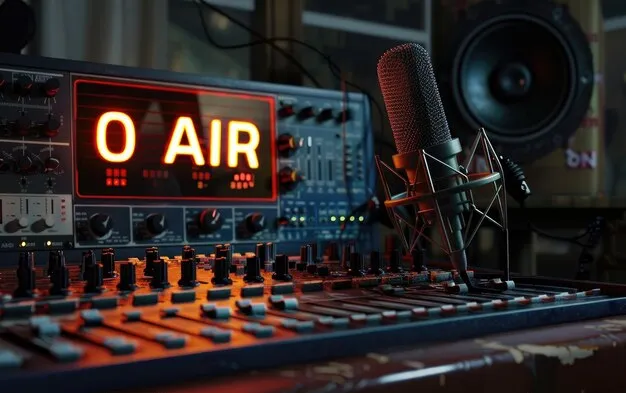
Why Your Favorite Station Feels Like Home Before You Even Pick a Song
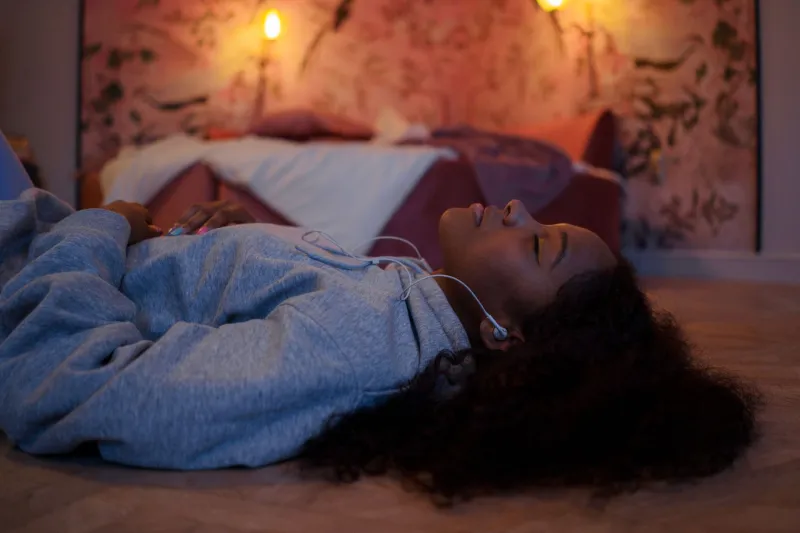
You're stuck in traffic, running late, slightly irritated at the world. You flip on the radio — or fire up a stream — and before the first chorus even kicks in, something inside you just... settles. You didn't consciously choose a song. You didn't curate a mood. You just hit play, and the station did the rest.
That's not a coincidence. That's science — and it's one of the most underrated things happening in audio entertainment right now.
The Brain Doesn't Wait for the Hook
Here's the thing most people don't think about: your emotional response to a radio station starts before the music fully registers. Researchers studying auditory processing have found that the brain begins categorizing sound within milliseconds — tone, tempo, texture, and even the space between sounds all get processed almost instantly, triggering emotional associations that are often tied to memory.
In plain terms? Your brain already knows how a station makes you feel based on dozens of tiny cues it absorbed the last hundred times you listened. The jingle, the host's laugh, the way a station fades one song into the next — all of it gets filed away. So when you tune back in, you're not just hearing audio. You're stepping into a fully loaded emotional context your brain already built for you.
Psychologists call this a conditioned response. Radio programmers just call it good radio.
Sequencing Is Everything (And Nobody Talks About It)
Ask most listeners why they love a station and they'll say something like, "It just plays good music." But dig a little deeper and you'll find it's rarely about individual songs — it's about the order of things.
Programming directors spend an almost obsessive amount of time thinking about sequencing: what follows what, how energy builds and releases across an hour, when to let a ballad breathe after three uptempo tracks, when to hit a listener with something unexpected right before the top of the hour. This isn't guesswork. It's a deliberate emotional architecture.
Think about how Radio JXL moves through a morning block versus a late-night stream. The morning energy is brighter, tighter, with host commentary that's punchy and brief — because listeners are multitasking, getting ready, getting out the door. By the time evening rolls around, the pacing loosens. Songs get a little more room. Hosts get a little more conversational. The whole experience shifts without you ever having to ask it to.
Your nervous system picks that up. Every single time.
The Host Effect: Why a Voice Can Anchor Your Whole Day
There's a reason radio personalities become such a fixture in people's lives that listeners genuinely grieve when a beloved host leaves a station. It's not parasocial delusion — it's the natural result of repeated, emotionally consistent interaction.
When a host has a recognizable laugh, a particular way of wrapping up a segment, a running joke that surfaces every Tuesday — your brain builds a relationship model around that person. Not a friendship exactly, but something that functions like one neurologically. Familiarity breeds comfort, and comfort is genuinely one of the most powerful emotional states a media brand can create.
This is part of why streaming playlists, for all their convenience, struggle to replicate what a well-programmed station delivers. A playlist doesn't have a personality. It doesn't react to the news. It doesn't chuckle at itself. It doesn't make you feel like someone, somewhere, is keeping you company.
Hosts humanize the listening experience in a way that no recommendation engine has cracked yet.
Sonic Branding: The Stuff You Don't Know You're Hearing
Beyond music and hosts, there's a whole invisible layer of audio identity at work. Sonic branding — the specific tones, stingers, transitions, and audio signatures that define a station's sound — operates almost entirely below conscious awareness.
You probably couldn't hum Radio JXL's station ID on command. But if it played right now, you'd recognize it in under a second. That recognition carries emotional weight. It signals: you're in the right place, this is familiar, you're safe to relax.
Sonic branding researchers talk about this in terms of "audio logos" functioning similarly to visual logos — except they bypass visual processing entirely and hit the limbic system, the part of the brain most directly tied to emotion and memory, faster than almost any other stimulus can.
In a distracted, noisy media environment, that's an enormous competitive advantage. It means a station doesn't have to earn your trust every single time you tune in. It already has it — baked into a few notes of audio that play between songs.
Why "Accidental" Moods Are Actually the Point
Here's where it gets really interesting. The most effective mood-shaping that radio does isn't the stuff listeners notice — it's the stuff they don't. The transition that's just smooth enough to keep you from reaching for your phone. The song choice that matches the emotional register of the story the host just told. The slight tempo shift that moves you from anxious to focused without you registering the change.
Listeners tend to describe this experience as a station "just getting them." What they're actually describing is the result of careful, intentional programming decisions made by people who understand the emotional landscape of their audience and work backward from the feeling they want to create.
It's a little like how a great restaurant isn't just about the food — it's the lighting, the music volume, the pacing of service, the temperature of the room. Everything is calibrated. You just experience it as "a good night out."
Radio works the same way. The best stations feel effortless because the effort is invisible.
The Loyalty Loop
All of this adds up to something that streaming services are spending billions of dollars trying to manufacture: genuine listener loyalty that doesn't depend on the latest release or the hottest trending artist.
When a station has successfully embedded itself into someone's emotional routine — their morning commute ritual, their late-night wind-down, their Sunday afternoon cooking session — it becomes almost impossible to replace with a playlist. Because you're not just replacing songs. You're replacing a feeling. A context. A version of yourself that only seems to show up when that particular station is on.
That's the accidental soundtrack effect in full bloom. It's not accidental at all, of course — but the best part is that it feels that way. You just turned on the radio, and suddenly you feel like yourself again.
That's not luck. That's Radio JXL doing exactly what it was built to do.