The Art of Breathing Room: How the Gaps Between Songs Shape the Way You Feel
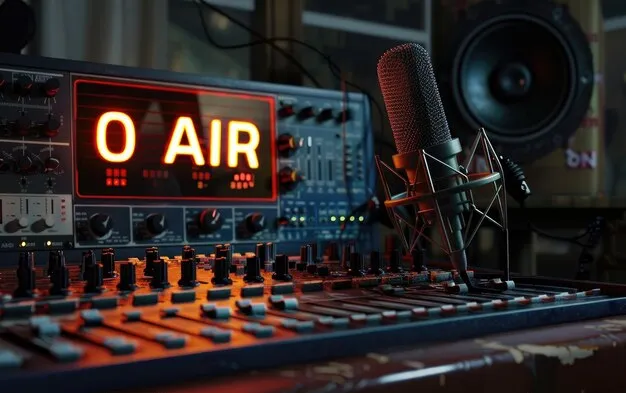
Photo: radio studio soundwave mixing board quiet atmosphere, via img.freepik.com
You're driving home, the radio's on, and a song ends. For just a beat — maybe two — there's nothing. No jingle, no DJ chatter, no ad. Just air. And somehow, in that tiny sliver of silence, you feel something shift. Your shoulders drop. You exhale. Then the next track kicks in and it hits differently than it would have if it had just bulldozed straight through.
That moment wasn't an accident. It was a decision.
At Radio JXL, we think about this stuff constantly — because what happens between the music is just as deliberate as the music itself. And if you've never stopped to think about it, you're not alone. Most listeners don't. That's kind of the point.
The Invisible Architecture of a Radio Hour
Every hour of programming has a shape. There's energy and release, tension and resolution — the same emotional architecture you'd find in a great movie or a well-written short story. Radio producers think of it almost like breathing. You can't inhale forever. You have to let the air out.
"People talk about radio like it's just a playlist with someone talking over it," says one audio producer who's worked in commercial radio for over a decade. "But the pacing is everything. When you get it right, listeners don't even know why they feel the way they do. They just feel it."
That feeling is the goal. And the tools to create it are surprisingly subtle: the length of a talk break, the tempo of the song you choose to follow a slow ballad, the decision to let a track fade naturally instead of cutting it cold. Every choice sends a signal to the listener's nervous system, whether they're consciously tracking it or not.
Why Silence Isn't Empty
In audio production, what engineers call "dead air" is traditionally the enemy. Old-school radio wisdom says you fill every second. Silence means something went wrong — a missed cue, a technical glitch, a DJ who zoned out.
But that thinking has been quietly evolving. Research in music psychology suggests that brief pauses actually heighten emotional anticipation. The brain, conditioned to expect continuity, gets a jolt of alertness when sound suddenly stops. When the music comes back in, the emotional payoff is amplified.
Think about how a live performer uses silence. A comedian pauses after a punchline. A singer holds a note and then lets the room go quiet before the final chorus. The silence is load-bearing. It holds the weight of what just happened and creates space for what's coming.
Radio works the same way — when it's done well.
"There's a difference between dead air and intentional space," explains one audio engineer who works with streaming platforms. "Dead air is a mistake. Intentional space is a technique. It tells the listener: pay attention, something matters here."
Talk Breaks Are a Form of Emotional Punctuation
If silence is the pause between sentences, a talk break is the sentence itself. But not all talk breaks are created equal. A DJ rattling off a phone number and a contest prize is filler. A host sharing a genuine, off-the-cuff reaction to a song they just played? That's connection.
The best talk breaks don't interrupt the listening experience — they deepen it. They give context, add warmth, and remind you that there's an actual human being on the other side of your speakers. In a world of algorithmic playlists that can feel like wallpaper, that human moment is increasingly rare and, because of that, increasingly powerful.
At Radio JXL, our hosts are coached to treat talk breaks less like announcements and more like conversation. Short, specific, real. The goal is never to fill time — it's to add something that makes the next song land harder.
"The worst thing a DJ can do is say words that don't mean anything," one veteran broadcaster told us. "Listeners tune that out instantly. But if you say something true — something that connects to what they're already feeling — they'll remember it longer than the song."
The Science of the Segue
Here's something most casual listeners don't realize: the transition between two songs is one of the most carefully considered moments in radio programming. Key matching, tempo flow, emotional arc — producers and music directors analyze all of it.
A jarring segue can actually trigger a mild stress response. Your brain was following a sonic thread, and suddenly it got cut. On the flip side, a perfectly matched transition can create a sense of flow so seamless it feels almost euphoric — what psychologists sometimes describe as a component of the "flow state."
Spotify and Apple Music have invested heavily in crossfade algorithms for exactly this reason. But algorithms work from data. Radio producers work from feel. And that distinction matters more than the streaming giants would probably like to admit.
At Radio JXL, our programming team maps out not just what songs play, but how they connect. The end of one track and the beginning of the next is treated like a handshake — it has to feel natural, intentional, and warm.
What Listeners Actually Notice (Even When They Don't Know It)
We asked a handful of regular Radio JXL listeners to describe what keeps them coming back versus what makes them change the station. Almost none of them mentioned specific songs first. They talked about feel.
"It doesn't feel rushed," said one listener from Austin, Texas. "Some stations feel like they're in a panic, like they're scared of quiet. This one breathes."
Another listener from Chicago put it this way: "I can't always tell you what song was on, but I know when I get out of the car after listening, I'm in a better mood. It's consistent. It feels intentional."
That word — intentional — kept coming up. And it's not a coincidence. When programming is thoughtfully paced, listeners feel cared for, even if they can't articulate exactly why. The opposite is also true: when a station feels chaotic or relentless, listeners feel vaguely stressed and eventually tune out.
Pacing as a Form of Respect
At its core, smart radio pacing is about respecting your audience's emotional experience. It's an acknowledgment that listening isn't passive — it's something people do with their whole nervous system. They bring their moods, their mornings, their commutes, their heartbreaks to every hour of programming. The least a station can do is meet them where they are.
The silence between songs isn't wasted time. It's an invitation to feel. The talk break that actually says something isn't dead weight — it's proof that someone on the other end is paying attention. And the segue that flows like water isn't luck — it's craft.
Radio JXL is built on the belief that audio is an experience, not just a product. And sometimes the most powerful part of that experience is the moment when the music stops — and everything goes quiet — and you realize you were listening more deeply than you knew.