Tuning Out the Noise Inside Your Head: How Radio Became America's Favorite Mental Escape

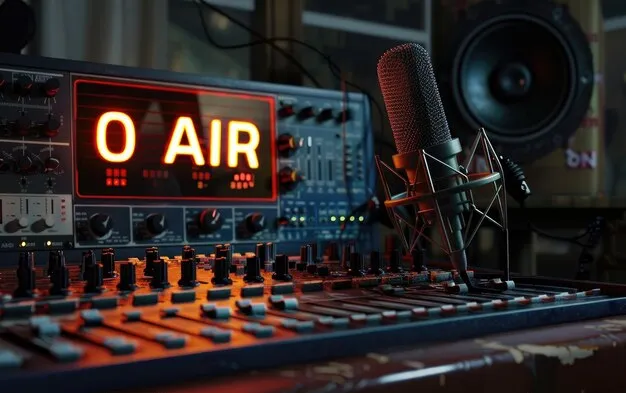
Photo by Photo by Ilias Chebbi on Unsplash on Unsplash
There's a moment most of us know well. You're on the subway, stuck in bumper-to-bumper traffic on I-95, or just walking the dog around the block — and the second the earbuds go in, something loosens. The spiral of to-do lists, the replayed conversation from Tuesday's meeting, the low-grade hum of dread about literally everything — it all dials down just a little. Not because the problem went away. Because someone started talking, or a song came on, and your brain finally had somewhere else to go.
This isn't a coincidence. And it's not laziness. According to a growing number of mental health professionals, intentional audio distraction — specifically the kind delivered by radio and streaming talk formats — is quietly becoming one of the most accessible tools people have for managing everyday anxiety.
The Overthinking Epidemic Nobody Talks About
The American Psychological Association has documented rising anxiety rates across virtually every demographic for the better part of a decade. But it's not just clinical anxiety driving people to hit play. It's the low-level, constant mental noise that digital culture has basically normalized. Notifications, news cycles, social comparison, the pressure to be productive every waking hour — the average American brain in 2024 is running hot.
Dr. Simone Hartley, a licensed clinical psychologist based in Chicago who works with young professionals, describes it plainly. "The mind defaults to problem-solving when it has nothing to do," she says. "For a lot of people, silence isn't peaceful — it's an invitation for rumination. Audio fills that gap in a way that's low-stakes and non-demanding. You're not being asked to respond, to perform, or to make decisions. You just receive."
That distinction — receiving versus engaging — turns out to be significant. Scrolling social media technically occupies your attention, but it also triggers comparison, reaction, and often more anxiety. Radio and streaming audio, by contrast, ask almost nothing of you. You don't have to look at it. You don't have to respond. It's just there.
Why a Voice Works Better Than a Playlist (Sometimes)
For a lot of Radio JXL listeners, it's not even about the music. It's about the voice.
Marcus T., a 34-year-old logistics coordinator from Atlanta who commutes an hour each way, puts it like this: "I don't even always hear what they're saying. But knowing there's a person there, talking, being normal — it makes me feel less alone in the car. Less in my own head."
That tracks with what psychologists call "parasocial relationships" — the one-sided but emotionally real connections people form with media figures. Radio hosts, in particular, have always been uniquely good at fostering this. A familiar voice that greets you every morning, that makes jokes, that reacts to the same news you're absorbing — it mimics the texture of human company in a way that a curated playlist simply can't.
Dr. Hartley notes that this mirrors something deeply familiar. "Think about how older generations described their relationship with radio. People in the 1940s and '50s talked about their favorite radio programs the way we talk about close friends. That dynamic never really went away — it just got buried under newer technology for a while."
The Commute as Mental Transition Zone
There's a reason the commute became the classic radio moment. It was never just about getting from point A to point B. It was about decompression — a buffer zone between the demands of work and the demands of home. The commute gave people permission to be in between, and radio was the perfect companion for that liminal space.
Even as commuting patterns shifted — remote work, flexible schedules, the rise of the home office — that psychological need didn't disappear. It just relocated. Radio JXL listeners report tuning in during dog walks, grocery runs, household chores, even while lying on the couch staring at the ceiling. The physical commute is optional. The mental one isn't.
Jamila R., a freelance designer in Austin, says she keeps a talk stream running almost constantly during her workday. "If it's too quiet, my brain starts catastrophizing. The radio keeps just enough of my attention occupied that I can actually function. It's like white noise, but with personality."
Curated vs. Algorithmic: Why It Matters for Anxiety
Here's something worth considering: not all audio is created equal when it comes to mental relief. There's a meaningful difference between a station that chooses what you hear next and an algorithm that keeps optimizing for engagement.
Algorithmic playlists are designed to keep you hooked — which sounds helpful, but often means they're engineered to trigger emotional responses, keep you slightly unsettled, keep you scrolling. A curated radio format, on the other hand, has a different contract with the listener. It says: we've thought about this. We've made choices. You can relax.
That sense of being held — of trusting that someone else has made the decisions for a while — is, according to Dr. Hartley, genuinely calming. "There's a reason people find certain routines soothing. Predictability reduces the cognitive load. When you know the station has a vibe, a shape, a personality, your nervous system can actually settle."
Radio as Ritual, Not Background Noise
What's interesting is that the listeners who describe radio as most therapeutic aren't necessarily the ones zoning out completely. They're often the ones who've built it into a ritual.
Same station, same time of day, same host. There's a comfort in that repetition that goes beyond simple habit. It's closer to what therapists call "grounding" — anchoring yourself to something consistent when everything else feels uncertain.
For Radio JXL, that's kind of the whole point. Your sound. Your station. Always on. The "always on" part isn't just a marketing line — for a lot of listeners, it's a genuine reassurance. The stream will be there. The voice will show up. The music will play. In a world that constantly demands your attention and rarely gives you a break, that reliability is, quietly, everything.
Give Your Brain a Place to Land
None of this means radio is therapy. It's not a substitute for professional support, and it won't solve the structural stressors that have so many Americans running on empty. But it is something real — a low-barrier, always-accessible way to give your overworked mind a soft place to rest.
Maybe that's why people keep coming back. Not because the content is always life-changing. Not because every song is a banger or every host is brilliant. But because sometimes you just need a voice in the room, a beat to follow, a station that shows up for you every single day without asking anything in return.
That's the quiet superpower of radio. And honestly? Your brain probably already knew that.