Too Many Songs, Not Enough Soul: How Radio's Old-School Limits Became the New Freedom

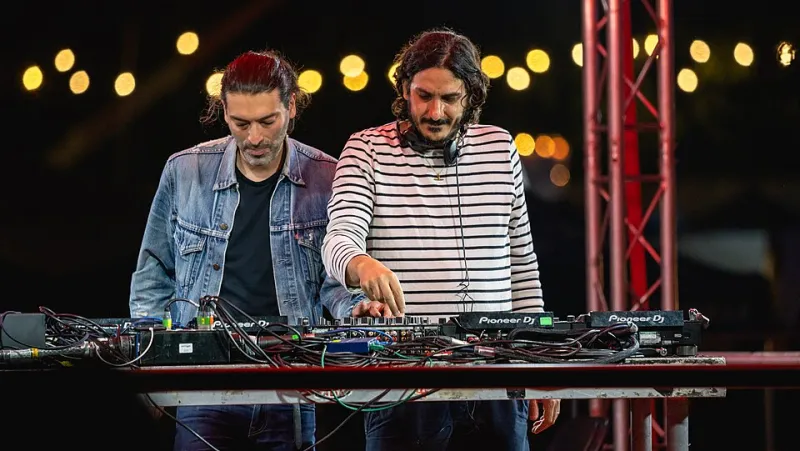
Photo by Photo by Shoham Avisrur on Unsplash on Unsplash
Somewhere between your 47th abandoned Spotify playlist and the third time you spent twenty minutes picking a song only to skip it thirty seconds in, something clicked. Or maybe it didn't click — maybe it just quietly broke. Because that's the thing about decision fatigue: it doesn't announce itself. It just leaves you staring at an infinite library of music, completely unable to enjoy any of it.
And then you flipped on the radio.
The Tyranny of the Infinite Queue
We were sold a dream in the early streaming era. Every song ever recorded, available instantly, tailored to your exact mood via an algorithm that supposedly knows you better than your best friend. It sounded incredible. It was incredible — for about fifteen minutes.
Psychologists have a name for what happened next: the paradox of choice. Barry Schwartz wrote the book on it back in 2004, but the streaming era turned his theory into a full-blown cultural crisis. When you have unlimited options, choosing any single one starts to feel like a loss. You pick a song and immediately wonder if a better one is out there. You build a playlist and abandon it because curating feels like work. You let an algorithm decide and then feel vaguely hollow because nothing about the experience was yours — but also nothing was anyone else's, either. It was just... math.
The result? A generation of listeners who technically have access to more music than any humans in history, and who are somehow less satisfied with their listening experience than their parents were spinning records on a Sunday afternoon.
Why a DJ Saying "Here's What's Next" Feels Like a Gift
Here's the counterintuitive truth that radio figured out decades ago and streaming is only now scrambling to understand: constraints aren't the enemy of enjoyment. They're often the whole point.
When a DJ at Radio JXL lines up the next track, they're not limiting your freedom — they're doing something genuinely generous. They're removing a decision from your plate. They're saying, I've thought about this, I know what fits here, trust me. And in 2024, that kind of confident editorial voice is practically a luxury good.
There's real psychology behind this. Research on "satisficing" — a term coined by Nobel laureate Herbert Simon — suggests that humans don't actually want to optimize every decision. We want good-enough choices made efficiently, so we can spend our mental energy on things that matter. Radio, by its very nature, is a satisficing machine. You tune in, you get music, you move on with your life. The flow is predetermined. The transitions are handled. The only job you have is to listen.
That's not a bug. That's the entire feature.
The Curation Economy and Why Radio Was There First
It's funny — the word "curated" has become one of the most overused terms in modern culture. Curated feeds. Curated menus. Curated Instagram grids. Everyone's curating everything, all the time, and the word has been stretched so thin it barely means anything anymore.
But actual curation — the kind where a human being with taste, experience, and a point of view makes deliberate choices about what you hear and when — that's genuinely rare. And radio has been doing it since before most streaming executives were born.
A good radio programmer thinks about arc. They consider energy levels across a two-hour block. They know that dropping a slow ballad after three uptempo bangers creates a specific emotional release. They understand that the song you play at 7 AM on a Monday hits differently than the same song at 11 PM on a Friday, and they program accordingly. That's not just playlist management. That's storytelling.
Streaming algorithms can approximate some of this — they're getting better at it every year — but they're still optimizing for engagement metrics, not human experience. There's a difference, and listeners can feel it even when they can't articulate it.
Digital Detox, Audio Edition
The wellness industry has spent years convincing Americans that they need to unplug from their screens. Cold plunges, dopamine fasts, phone-free dinner tables — the backlash against digital overwhelm is real and it's growing. But nobody talks much about audio overwhelm, even though it's just as exhausting.
Constantly managing your own listening experience — skipping tracks, adjusting recommendations, rating songs, building and rebuilding playlists — is cognitive labor. It might feel like leisure, but your brain is working the whole time. Handing that labor off to a radio station, to an actual human who's made the call so you don't have to, is a legitimate form of mental rest.
This is part of why live radio is seeing renewed interest from younger listeners who grew up entirely in the streaming era. They're not nostalgic for radio — they never experienced it as their primary medium. They're drawn to it because it's different from everything else in their digital lives. It's passive in the best possible way. It asks nothing of them except to be present.
The Flow State You Didn't Know You Were Chasing
Musicologists and sports psychologists both talk about "flow" — that state of effortless absorption where you're fully in the moment and time seems to disappear. It's notoriously hard to manufacture, and one of the quickest ways to kill it is to interrupt it with choices.
Radio, by design, protects flow. There are no pop-ups asking if you're still listening. No algorithm pivot when you accidentally click the wrong song. No rabbit hole of "you might also like" pulling your attention sideways. The music just keeps coming, shaped by someone who thought about it, and your brain can actually settle in.
That settling-in feeling is what a lot of listeners describe when they talk about why they've come back to radio after years away. They don't always have the vocabulary for it, but what they're describing is flow — and the specific relief of having someone else hold the wheel for a while.
Less Really Can Be More
None of this means streaming is going anywhere. It's an extraordinary tool, and for plenty of listening situations — deep dives into a specific artist's catalog, working out, focused work sessions — it's genuinely the right choice. The point isn't that unlimited options are bad. The point is that unlimited options aren't always what you need.
Sometimes what you need is someone who's already done the work. Someone who's thought about the mood, the moment, the sequencing. Someone who's willing to say, here's what we're listening to right now — and mean it.
That's what radio has always offered. And in a world drowning in choices, that kind of confidence is starting to sound a lot less like a limitation and a whole lot like a lifeline.