Why a Real Human Behind the Mic Can Do What No Algorithm Ever Will
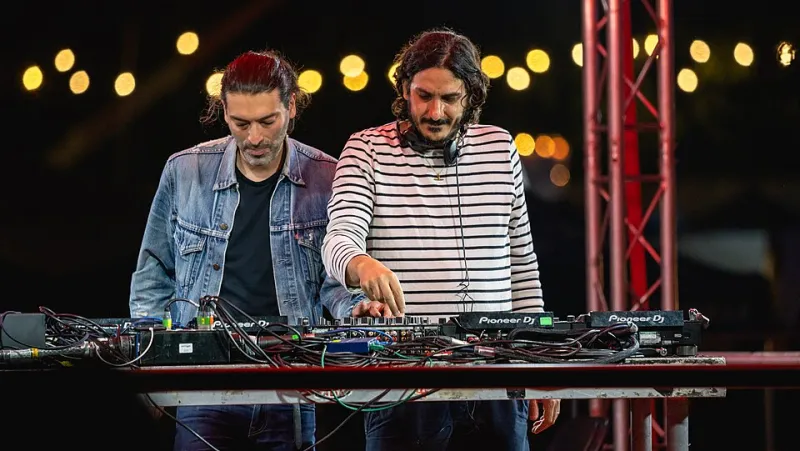
Photo: Raph_PH, CC BY 2.0, via Wikimedia Commons
Algorithms are genuinely impressive. Feed a streaming platform a few years of your listening history and it'll map your taste with eerie precision — surfacing that deep-cut 90s R&B track you forgot you loved, or dropping a new indie release right into your rotation the moment it fits your profile. There's real science behind it, and it works.
But here's what it can't do: it can't look at the world outside your headphones and decide what you need to hear right now.
That's the space where live radio has always lived. And according to researchers who study how audio affects human emotion — as well as the DJs who've been doing this for years — it's a space that no machine has come close to occupying.
The Difference Between Personalization and Presence
When we talk about what makes streaming feel smart, we're really talking about personalization — the ability to serve you content that matches your established preferences. It's reactive. It looks at what you've done and predicts what you'll want next.
Live radio, especially a show helmed by an experienced host, operates on a completely different frequency. It's present. A skilled DJ isn't just spinning tracks — they're reading the room in real time, adjusting the energy of a set based on the collective mood of an audience they've spent years getting to know.
Dr. Annette Ferraro, a cognitive neuroscientist at the University of Michigan who studies auditory processing and emotional response, puts it plainly: "Music activates the limbic system — the emotional brain — almost instantly. But context matters enormously. The same song can feel uplifting or melancholy depending on what precedes it, what the listener is experiencing, and how it's introduced. A human curator can navigate that context in ways that a predictive model simply isn't built for."
In other words, an algorithm knows your history. A great DJ understands your moment.
Reading the Room at 30,000 Listeners
For Radio JXL morning host Marcus Delray, reading the room isn't a metaphor — it's the actual job description.
"There are mornings where you can just feel it," Delray says. "Maybe there was a big storm overnight, or some local news hit that has people shaken, or it's just one of those gray Monday mornings where the whole city is moving slow. I'm not going to come out of the gate with a high-energy banger. I'll ease in. I'll acknowledge what everyone's feeling before I try to shift it."
That kind of intuitive calibration is what separates live hosting from automated playlisting. Delray describes it as a constant feedback loop — listener calls, social media reactions, even the tone of the messages coming into the show's chat — all feeding into decisions made in real time, sometimes in the seconds between one song ending and the next beginning.
"The algorithm sees your play history. I see what's happening in the world right now," he says. "Those are very different data sets."
The Neuroscience of Being Heard
There's something deeper going on here than just song selection, though. Research into parasocial relationships — the one-sided emotional bonds people form with media personalities — suggests that the presence of a human voice carries emotional weight that music alone doesn't.
When a DJ speaks directly to you — acknowledging your city, your weather, your week — your brain processes that interaction in ways that mirror real social connection. It's not the same as talking to a friend, but it activates similar neural pathways around belonging and recognition.
Dr. Ferraro's research has explored how this plays out in audio specifically: "There's a phenomenon we see in audio branding where a familiar voice can actually prime emotional receptivity. When listeners trust a host, they become more open to the emotional arc that host is creating. The music lands differently because the relationship is already there."
This is why Radio JXL listeners often describe their favorite shows as feeling like hanging out with someone they know, even if they've never met the host. The brain isn't making a mistake — it's responding to genuine human warmth that no recommendation engine has figured out how to bottle.
When the Algorithm Gets It Wrong
Anyone who's used a streaming platform for long enough has experienced the jarring moment when the algorithm misreads the room. You're at a party and the auto-generated playlist takes an abrupt left turn. You're processing something emotional and the "mood" playlist serves up something weirdly upbeat. You're in a focused work session and suddenly there's a track with a tempo that breaks your concentration entirely.
These aren't bugs — they're the inherent limitation of a system that's optimizing for pattern matching, not emotional intelligence.
Radio JXL afternoon host Simone Park has a theory about why this gap matters more than people realize: "Mood isn't static. It shifts during a song, during a segment, during an hour. And sometimes what you need isn't what you'd choose if you were picking for yourself — it's something that moves you somewhere better. That's the craft of it. Knowing when to give people what they want versus what they actually need."
Park describes moments during her show where she'll sense — through caller energy, through the chat, through pure instinct — that the room needs a reset. She'll pivot away from the planned set, drop something unexpected, say a few words that acknowledge the vibe without making it heavy, and watch the energy shift. "You can't automate that decision," she says. "It comes from being a person who has feelings and also knows how music works."
The Human Element Is the Feature, Not the Flaw
There's a tendency in tech culture to treat human involvement in curation as a kind of inefficiency — something to be optimized away. But what Radio JXL's approach to live programming demonstrates is that the human element isn't a workaround. It's the whole point.
The unpredictability of a live host, the slight imperfections of a set that was adjusted on the fly, the moment a DJ laughs at something unexpected and you laugh too from your car — these aren't things that algorithms aspire to and fall short of. They're features of a fundamentally different kind of experience.
Streaming is incredible for deep listening, for discovery, for building a personal archive of sound. But for the experience of being in a shared moment — of feeling like your mood is being tended to by someone who actually gives a damn — live radio remains genuinely unmatched.
Tune into Radio JXL and you'll hear it immediately. Not just music, but a person. And sometimes, that's exactly the frequency you need.