One Station or a Hundred? The Surprising Truth About How Radio JXL Listeners Actually Pick Their Sonic Home Base
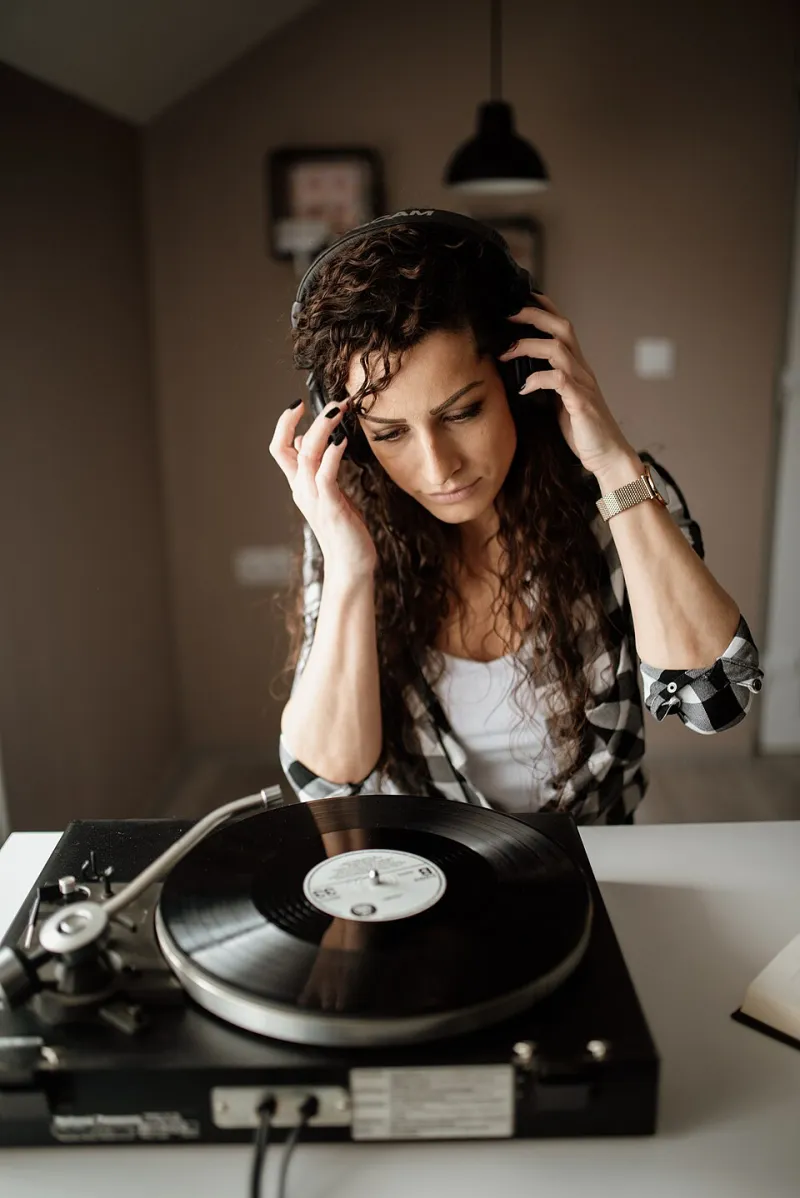
Photo: Shixart1985, CC BY 2.0, via Wikimedia Commons
Spotify will tell you it knows you better than you know yourself. Apple Music has an algorithm that supposedly maps your taste with surgical precision. And yet, a huge chunk of Americans still land on the same radio station every single morning without giving it a second thought. No recommendation engine required. No playlist curation necessary. Just — that station. Always that one.
So what's actually going on? Are radio listeners genuinely loyal, or are they just creatures of habit who haven't thought too hard about their options? And how does that compare to the way people navigate the increasingly crowded world of streaming audio?
We dug into listening behavior among Radio JXL's audience — and what came back was a picture that's way more nuanced than the simple loyal-versus-hopper binary most people assume.
The Myth of the Pure Loyalist
Let's start by busting a comfortable myth. The idea of the ride-or-die radio loyalist — the person who has listened to the same station every day for 15 years and would sooner change their political party than their preset — is real, but it's rarer than the radio industry has traditionally wanted to admit.
What the data actually shows is something more like contextual loyalty. Most listeners have a primary station — a home base they return to consistently — but they also have a rotation. Different formats for different moods. Different programming for different times of day. The question isn't really "are you loyal?" It's "loyal to what, and when?"
Radio JXL listeners tend to anchor to the station most heavily during two windows: the first hour of the day and during physical activity like workouts or walks. Those are the moments when the station's personality and energy feel most aligned with what the listener needs. Outside of those windows, there's more wandering — and that wandering tells you a lot.
What Actually Creates Station Stickiness
If you ask listeners why they keep coming back to a particular station, the answers fall into a pretty consistent pattern — and almost none of them are about music selection alone.
Personality is the big one. Not the music. The people. A morning host who makes you laugh before you've had your coffee. A DJ whose taste you've come to trust. A talk segment that reliably says something worth thinking about. These are the hooks that turn casual listeners into regulars.
"I could probably find most of the songs on a playlist somewhere," admits Derek, a 34-year-old teacher in Nashville who's been a Radio JXL regular for years. "But I can't find the hosts anywhere else. That's what I'm actually tuning in for."
This is the thing that streaming platforms have been trying to crack for years and keep fumbling. An algorithm can serve you a song you'll like. It cannot make you feel like someone is actually there with you. Radio — good radio, personality-driven radio — has always understood that listeners aren't just consuming content. They're keeping company.
The Streaming Switcher vs. The Radio Regular
Here's where the comparison between Radio JXL listeners and streaming platform users gets genuinely interesting.
Streaming users, by and large, are format-switchers by design. The whole architecture of Spotify or Apple Music encourages you to browse, explore, jump between playlists, and treat your listening like a personal DJ session. That's not a bug — it's the product. The platform wants you to engage with its interface, not just press play and disappear.
Radio listeners, even in 2025, tend to have a fundamentally different relationship with audio. For many of them, the whole point is that they don't have to choose. They tune in, they trust the station to take it from there, and they go about their lives. The passive dimension of radio listening isn't a weakness — it's a feature that a significant portion of the population actively values.
That said, Radio JXL listeners who also use streaming platforms show a really specific split-use pattern. Streaming for solo, focused listening — late-night deep dives, workout playlists built around a specific vibe. Radio for ambient, social, or background listening — mornings, car trips with other people, household routines where you want presence more than precision.
Mood Mapping and the Format Rotation
For the listeners who do hop between stations or formats, the switching logic is almost always mood-driven rather than random. And the patterns are surprisingly consistent across different demographics.
Energy levels matter most. High-energy moments — morning motivation, workouts, driving on the highway — pull people toward upbeat music formats and personality-heavy programming. Lower-energy windows — late evenings, weekend afternoons, background listening during focused work — tend to pull toward mellower music, longer-form talk, or curated thematic blocks.
What this means for a station like Radio JXL is that the goal isn't to be everything to every listener at every moment. It's to be the right thing at the right moment — and to be consistent enough that listeners know exactly what they're walking back into when they return.
Consistency, it turns out, is underrated. One of the most common things Radio JXL listeners cite when explaining why they keep coming back is the feeling of knowing what to expect. Not in a boring, predictable way — but in the way you trust a good restaurant or a reliable friend. You know the vibe. You know it'll be good. That reliability is worth something.
The Loyalty Equation in a Noisy Market
With more audio options available than at any point in history, the fact that radio still generates genuine listener loyalty is worth taking seriously. It's not nostalgia. It's not inertia. It's the result of something radio does that the algorithm economy genuinely struggles to replicate: human curation, delivered with personality, in real time.
The listeners who call Radio JXL their sonic home aren't there because they haven't discovered Spotify. They're there because they've discovered Spotify and they still come back. That's a choice. And choices, made consistently over time, are what loyalty actually looks like.
Station hopping happens. Mood-driven format switching is real and normal. But for a growing number of listeners, there's still one place that feels like theirs — a frequency they return to not because they have to, but because it genuinely feels like home.