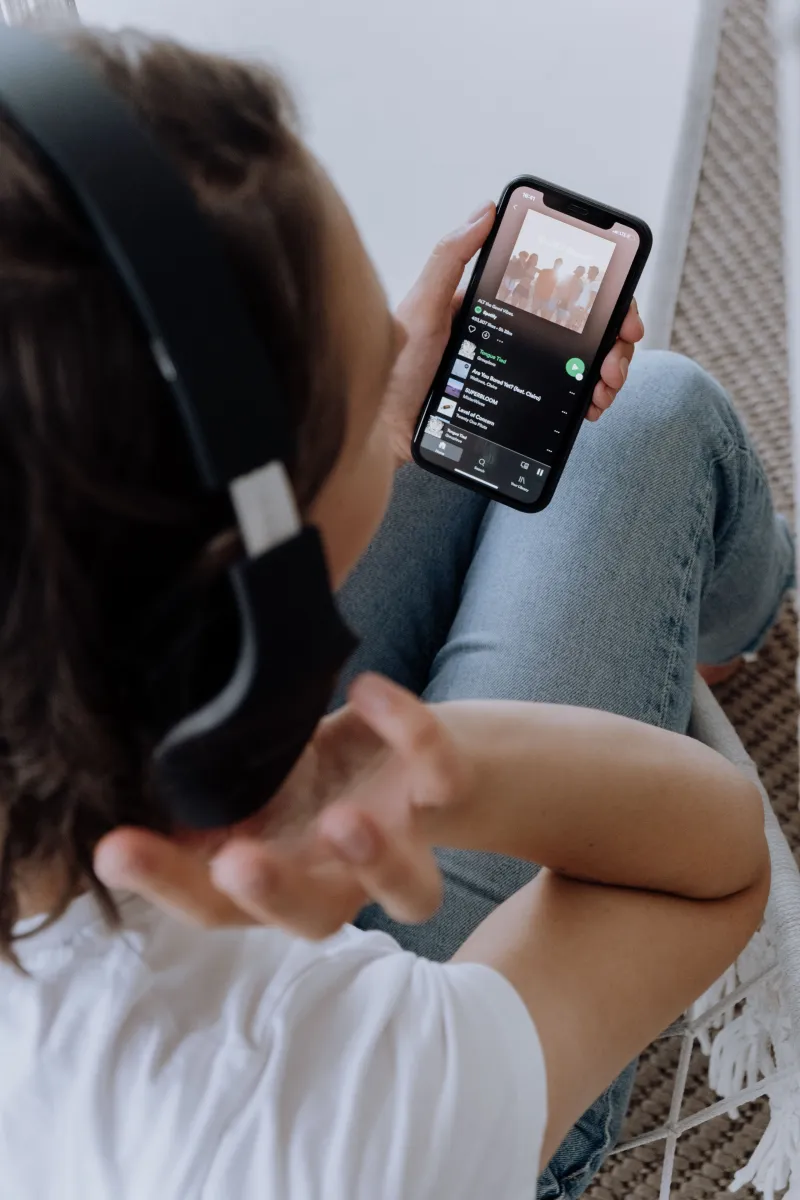
The Science of Not Listening: Why Radio Sounds Better When Your Brain Checks Out

Here's something worth sitting with for a second. You've probably spent a solid chunk of your life curating playlists — dragging songs around, second-guessing the order, deleting tracks that suddenly feel wrong — only to let the whole thing collect digital dust. Meanwhile, you flipped on a radio station while washing dishes last Tuesday, and three songs in, you were singing along to something you hadn't thought about in years.
That's not an accident. That's your brain doing exactly what it was built to do.
The Paradox of Too Much Control
Psychologists have a name for the creeping dread that comes with too many options: choice overload. Barry Schwartz wrote a whole book about it back in 2004, and the concept hasn't aged a day. When you're staring down a library of 100 million songs, the sheer volume of possibility doesn't feel like freedom — it feels like homework.
Your brain shifts into evaluation mode. Every song becomes a decision. Is this the right vibe? What comes after this? Am I in the mood for this tempo? Before long, you're not listening to music at all. You're managing it.
Radio flips that dynamic completely. When you tune in, the decision has already been made for you. The song is just there, already mid-chorus, already carrying momentum. You didn't choose it, which means you don't have to defend the choice. You can just... receive it.
What Neuroscience Says About Passive Listening
Researchers studying music and the brain have consistently found that passive, background listening activates a different — and in many ways richer — emotional response than deliberate, focused consumption. When your brain isn't working hard to evaluate what it's hearing, the default mode network kicks in. That's the part of your mind responsible for daydreaming, emotional processing, and autobiographical memory.
In plain terms: when you stop trying to listen, your brain starts feeling instead.
This is why a song you haven't heard in a decade can blindside you on a Tuesday afternoon while you're folding laundry. You weren't braced for it. There was no anticipation, no expectation, no context you'd loaded in advance. The song just arrived, and your emotional guard was completely down.
Active playlist consumption, by contrast, often involves anticipation. You know what's coming. You remember selecting it. That foreknowledge creates a kind of emotional ceiling — you can appreciate the song, but you can't be surprised by it.
The Role of Surprise in Musical Pleasure
Surprise is massively underrated as a component of why music feels good. Neuroscientist Stefan Koelsch has spent years studying how the brain processes musical expectation, and his findings point to something that radio listeners have known intuitively forever: the moments that hit hardest are the ones you didn't see coming.
Radio rotation is essentially a surprise-delivery machine. You don't know what's next. The station might follow a moody indie track with something uptempo and funky, and that contrast — that little jolt of the unexpected — triggers a dopamine response that a carefully ordered playlist simply can't manufacture.
When you build a playlist, you're optimizing for consistency. Radio optimizes for variety. And variety, it turns out, is a lot closer to how real emotional life actually works.
The Background Effect in Real Life
Think about the environments where music tends to hit you the hardest in everyday American life. The diner where you grew up. Your parents' kitchen on a Sunday morning. A road trip where someone else controlled the radio. The barbershop. The corner store.
None of those situations involved you curating anything. The music was ambient. It was background. And somehow, that's exactly why it burrowed in so deep.
There's a concept in environmental psychology called sonic wallpaper — the idea that background sound shapes mood and memory without ever demanding conscious attention. Radio has been doing this for a hundred years. The format was practically designed around the insight that the best listening experiences are often the ones happening slightly off to the side of your awareness.
At Radio JXL, this is something that shapes how programming flows throughout the day. The transitions, the pacing, the way energy builds across a block of music — it's all calibrated for the listener who's half-engaged, letting the station run while life happens around it. That's not a compromise. That's the whole point.
Why Intentional Listening Can Actually Exhaust You
There's a real cognitive cost to active music selection that doesn't get talked about enough. Every time you open a streaming app and scroll, you're spending mental energy — the same finite resource you've been burning through all day at work, in traffic, in every micro-decision you've made since breakfast.
Music is supposed to restore that energy, not drain more of it. But playlist management has quietly turned listening into another task on the to-do list. Another thing to optimize. Another performance of good taste directed at an algorithm that's watching what you skip.
Background radio removes all of that. You're not performing anything. You're not curating your identity. You're just letting sound happen, and your exhausted brain gets to go along for the ride without steering.
The Rediscovery Loop
One of the most underappreciated gifts of passive radio listening is what you might call the rediscovery loop. A song you forgot you loved surfaces during a random afternoon, and suddenly you're back in a specific summer, a specific feeling, a specific version of yourself. That emotional hit is disproportionately large compared to the song's actual runtime.
This almost never happens with algorithmic recommendation. When a streaming service surfaces an old favorite, it's usually because you've been nudged toward it — tagged, categorized, served up based on listening history. The discovery feels managed. Transactional.
When radio does it, the timing feels like coincidence. Like the station somehow knew. That feeling of serendipity — even if it's not entirely rational — is part of what makes the experience feel alive in a way that curated listening rarely does.
Let the Station Do the Work
None of this means you should stop building playlists forever. There's a time and a place for intentional listening, for sitting down with an album start to finish, for really digging into something new. That kind of attention is its own reward.
But if you've been wondering why your meticulously assembled queue feels flat lately — why the songs you chose aren't landing the way you expected — it might be worth trying something different. Put on a station. Let it run. Do something else.
Don't listen. Just let the music find you.
Your brain already knows what to do from there.