The Voice That Tells You the Bridge Is Out: Why Rural America Still Believes Its Radio Station
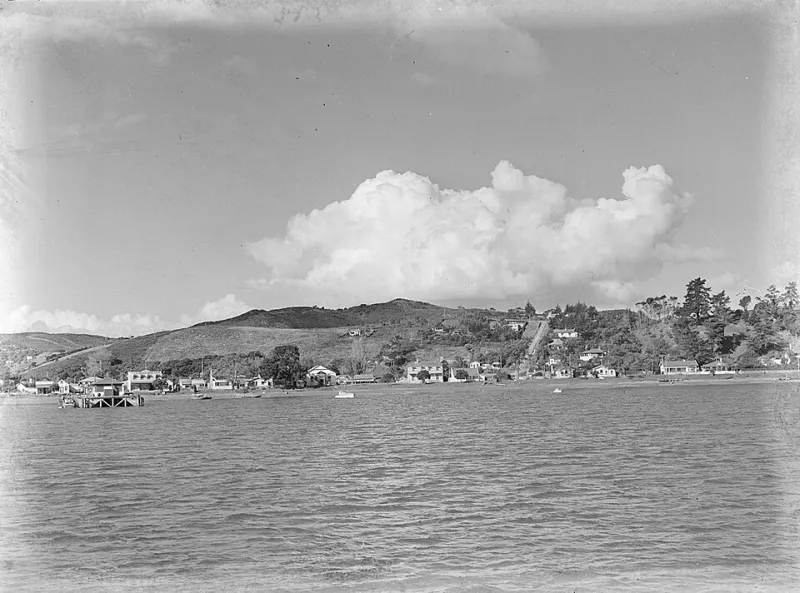
Photo: Collins, Tudor Washington, 1898-1970, photographer, CC BY 4.0, via Wikimedia Commons
Trust in national media has been sliding for years, and nobody needs another statistic to prove it. But here's the number that doesn't make headlines: in a lot of rural America, the most trusted voice in town isn't on a cable network or a news app. It's the person who just told you the bridge on Route 9 is out, the football game moved to Thursday, and the church supper got bumped to Sunday.
That voice belongs to a local radio station, probably one with a tower on the edge of town and a staff you could fit in a minivan. And whether the industry likes to admit it or not, these small-market stations have become something national media can't manufacture: a news source people actually believe.
The Information Is Boring. That's Exactly the Point.
What local radio delivers isn't glamorous. Road closures. School delays. The funeral visitation at the funeral home on Main Street. The FFA fundraiser. Whether the creek's coming up over the low-water crossing.
There's no spin in any of that, because there's nothing to spin. When the announcement is "the bridge is out," there's no angle. The listener doesn't wonder about the source's bias; they wonder if they should take the county road instead. That's a relationship national outlets simply cannot have with an audience of millions — the information is only useful because it's local, and it's only trusted because the person delivering it lives here too.
The DJ Who Also Reads the Obituaries
Part of what makes small-market radio trusted is that it refuses to stay in its lane. The same host who spins requests at noon will read obituaries at 4, call the Friday night basketball game at 7, and remind you to bring the hogs to the fairgrounds by Saturday.
Critics might call that a lack of format discipline. Listeners call it being useful. The station functions as a community switchboard — part jukebox, part bulletin board, part town crier — and the hybrid is the whole secret. You come for the music and stay for the information, or vice versa, and over years the two blur into one thing: the sound of the town talking to itself.
You cannot replicate that online, and it's worth saying why. A Facebook community group has no editorial judgment, so rumors and closures mix freely and nobody's accountable when they're wrong. A news app has judgment but no local presence — it doesn't know your school district's bus routes. The local station has both: a human who knows the area making the call, and a broadcast signal that reaches the whole community at once, including the folks without broadband.
When the Weather Turns, the Tower Earns Its Keep
Nothing tests trust like severe weather, and nothing pays it off like a local station. When a tornado warning drops, the national apps send the same alert to everyone in a giant polygon. The local station tells you which towns are in the path, which shelter opens when, and — this is the part that matters — the host stays on the air until it's over, reading spotter reports from people they know by first name.
People remember who was on the air during the storm. That memory compounds over decades, through floods and ice storms and the summer the grain elevator burned. Trust isn't built in a news cycle; it's built in a weather event.
The Fragile Part
Here's the uncomfortable truth: this trust is an asset nobody's properly valuing. Small stations run lean, ad revenue is under pressure from every direction, and the owners consolidating stations two states away don't always understand that cutting the local morning show isn't a cost saving — it's amputating the reason the community listens at all.
When a small town loses its station, it doesn't just lose music. It loses the school closings, the road conditions, the obituaries, the game broadcasts. It loses the shared facts. And what fills that vacuum is usually a feed of rumors with no one accountable for any of them.
So here's the argument, plainly: the local DJ who tells you the bridge is out is performing one of the last genuinely trusted acts in American media, and communities ought to treat it that way — listen, support the advertisers who keep it on air, and expect more from it, not less. Because once that voice goes silent, you don't get it back. You just get the internet's best guess.