The Dial-A-Song Revival: Inside the Weird, Wonderful Return of the Radio Request Line
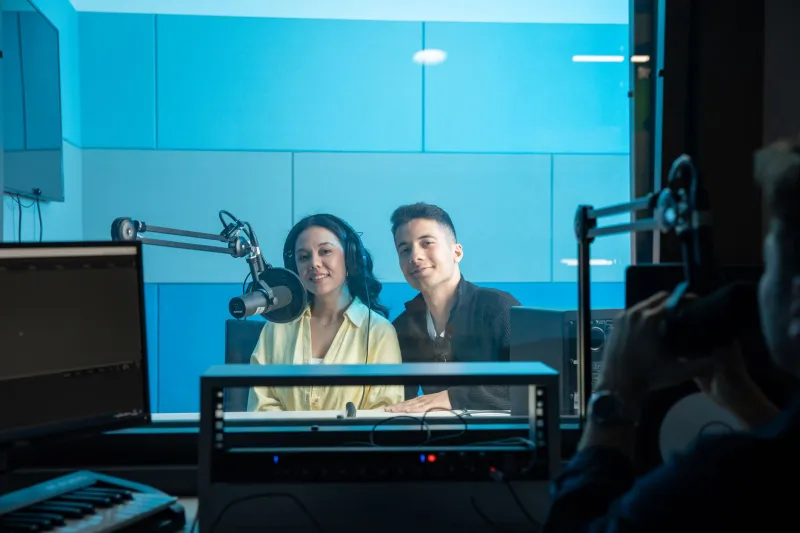
There's a sound that used to be everywhere in American radio, and then it all but vanished: the beep of a caller being put on the air, followed by a slightly nervous voice saying, "Hey, love the show, could you play something for my wife?"
For a couple of decades, that moment seemed destined for the museum. Why call a station and wait 40 minutes for a song you could pull up in four seconds? But something funny has happened over the past few years. The request line is back — and on streaming-era stations like ours, it's not a nostalgia gimmick. It's becoming appointment listening.
The Counterintuitive Comeback
Start with the puzzle: we live in the most on-demand musical moment in human history. Every song ever recorded sits in your pocket. So why would anyone in Columbus or Sacramento sit through three other callers just to hear "More Than a Feeling"?
Because that's not actually what they're asking for.
When a listener calls in, the song is almost secondary. What they're really doing is participating. They're taking their turn in a shared public moment — a tiny, unscripted piece of live theater where a stranger's birthday, breakup, or road trip becomes everybody's business for ninety seconds. No playlist app can manufacture that. The skip button, for all its power, never once made anyone feel like part of something.
Stations have noticed. Request hours that used to be sleepy weekday filler are now being built into prime streaming slots, promoted on socials, and clipped for TikTok within the hour. Some shows run entire segments where the only rule is that the caller has to explain why — and honestly, the stories are the show.
Dedication Nation, Version 2.0
The late-night dedication is the request line's most enduring format, and it's evolved in interesting ways. The classic version — a slow song, a shout-out, a sign-off — still works. But today's versions are looser and funnier. Callers rank their top five gas station snacks before getting their song. Couples call in to settle debates. One caller somewhere in the Midwest recently spent two full minutes making the case that every workout should end with a power ballad, and the host just let it ride because, well, it was great radio.
That's the secret the algorithm never figured out: imperfection is a feature. A request show with a wrong number, a dropped call, and a guy who clearly called from his truck with the window down is alive in a way no auto-generated mix can fake.
From Phone Line to Feed
Here's where the revival gets modern. The request call doesn't live on the airwaves alone anymore. Stations clip the best calls and post them, and those clips travel. A heartfelt dedication to a deployed spouse, a kid requesting a song for their grandma's 90th — these moments rack up shares because they're genuine in a feed full of manufactured content.
The result is a feedback loop: viral clips bring in new listeners, new listeners become callers, and callers generate the next viral clip. The humble request line has quietly become a content engine wearing a bathrobe.
Why the Ritual Sticks
There's something almost ceremonial about the whole thing. You hear the number. You dial. You sit in a hold queue with actual suspense — will they get to me? — and when that red light finally means you're live, you get your moment. Your song. Your name, said out loud, by a real human, to thousands of strangers.
In an era where music consumption is silent, solitary, and invisible, the request call is a small act of showing up. It says: I was here, on this night, listening to this station, and I wanted everyone to know.
That's not a feature you can ship in an app update. That's why the phone keeps ringing — and why we keep answering.
So go ahead. The number's on the screen. Somebody out there wants to hear why that song matters to you.