Double-Dipping on Audio: How Radio DJs Are Building Empires Beyond the Booth — and Why Radio Is Still Winning
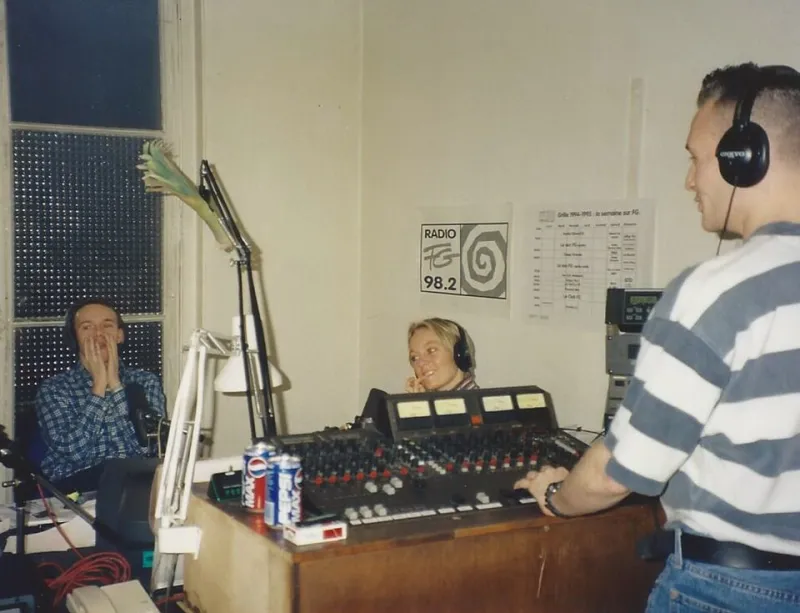
Photo: Mr Etrange, CC BY-SA 4.0, via Wikimedia Commons
If you've been paying attention lately, you've probably noticed something a little strange happening in the audio world. The same DJ who wakes you up every morning on your local Top 40 station is also dropping a weekly podcast, running a Discord server with thousands of members, and occasionally popping up on YouTube with behind-the-scenes content. It feels like radio should be bleeding out from all these exits. But somehow — stubbornly, impressively — it's not.
Welcome to the podcast paradox.
Everyone's Jumping Platforms. Radio Doesn't Seem to Care.
The numbers tell a story that doesn't match the narrative. According to Nielsen, over 230 million Americans tune into AM/FM radio every month. That figure has stayed remarkably flat over the past several years, even as podcast listenership exploded past 100 million weekly listeners and streaming services swallowed huge chunks of the music industry. Radio wasn't supposed to survive the digital revolution this well. And yet here we are.
Meanwhile, the personalities who built their names on radio aren't abandoning ship — they're just expanding their dock. Take any mid-to-large market morning show crew and there's a solid chance at least one of them has a podcast. Some are extensions of the show itself, some are passion projects that run totally independent of their radio gig. Either way, the move is intentional, and it's smart.
The key insight? These aren't competing channels. They're complementary ones.
The Funnel Nobody Talks About
Here's how it actually works in practice. A listener catches a radio DJ cracking jokes during their commute. They laugh, they feel connected, they Google the person's name. Suddenly they're subscribed to a podcast that goes deeper on topics the morning show barely has time to touch. They join a Discord to talk about last week's episode. They follow on Instagram. The radio show was the front door — everything else is the rest of the house.
This is what media strategists call a multi-platform funnel, and audio creators are getting really good at building them. The radio show provides the mass reach and the built-in trust. The podcast provides the depth and the on-demand flexibility. The Discord or community platform provides the intimacy and the superfan engagement that neither of the other two can fully deliver.
For listeners, it's genuinely great. You get the breezy, live energy of radio when you want it, and you get the long-form, unfiltered version of your favorite host when you're ready to go deeper. Nobody's forcing a choice.
Why Live Audio Still Has the Edge
Here's the thing about podcasts that rarely gets said out loud: they're fantastic, but they're also kind of lonely in a specific way. You're listening to something recorded days or weeks ago. The host doesn't know what's happening in the news this morning. They can't react to the snowstorm that just shut down half of Chicago or the wild play that ended last night's game in overtime.
Radio can. That's not a small thing.
Live audio has a texture that on-demand content simply cannot replicate. There's a shared experience happening when millions of people are tuned into the same station at the same moment. It's the audio equivalent of watching a sporting event live versus catching the highlights later — technically the same information, completely different feeling. Radio taps into something communal and real-time that podcasts, by their very nature, can't access.
And honestly? That's probably why listenership has stayed stable. People aren't choosing radio over podcasts or podcasts over radio. They're using both for entirely different emotional needs.
The Creator Economy Meets Old-School Broadcasting
What's fascinating about this moment is that radio DJs are essentially running creator economy playbooks that were written for YouTube and TikTok influencers — and finding that those same strategies translate beautifully to audio. Building a niche audience. Monetizing through Patreon or direct sponsorships. Creating community spaces where listeners feel ownership over the content.
The difference is that radio DJs start with something most YouTubers spend years trying to build: legitimacy and reach. A morning show host in a market like Atlanta or Dallas already has hundreds of thousands of loyal listeners before they ever record a single podcast episode. That's an enormous head start.
For platforms like Radio JXL, this dynamic is genuinely exciting. It's proof that audio — in all its forms — isn't a zero-sum game. A rising tide of listener engagement across podcasts, Discord communities, and streaming platforms actually reinforces people's appetite for live, curated audio experiences. The more someone falls in love with a podcast, the more likely they are to want the live version of that energy too.
What This Means for the Future
The fragmentation of audio isn't a crisis. It's an expansion. Think of it less like a pie being divided into smaller slices and more like a pizza place that added delivery, a food truck, and a catering service — the original restaurant is still packed on Friday nights.
What we're watching in real time is the professionalization of audio personality. The DJs and hosts who thrive in this environment won't just be good on the mic — they'll be architects of entire audio ecosystems, building listener relationships across multiple touchpoints that reinforce each other constantly.
Radio survives because it does something irreplaceable. Podcasts thrive because they do something different and equally valuable. And the smartest people in the audio business? They're not picking sides. They're doing both — and building communities around all of it.
That's not a paradox. That's just good audio strategy.